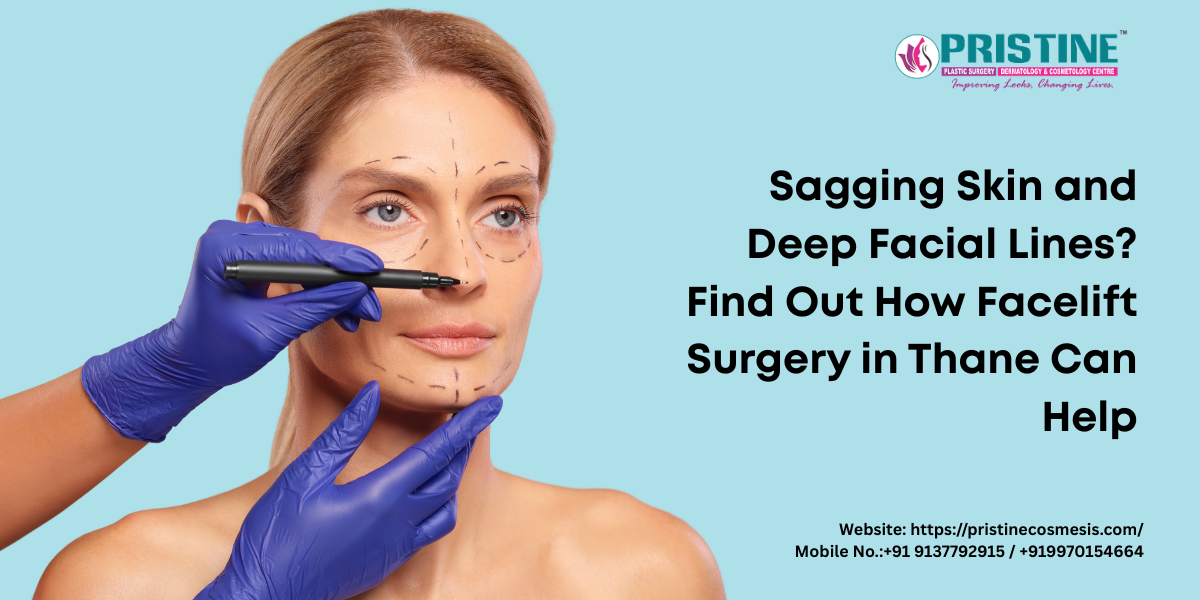
For some people, skincare, injectables and other non-surgical treatments may provide useful improvements. However, when facial skin laxity becomes more significant, a surgical approach may be considered.
If you are searching for Face Lift Surgery in Thane, understanding what a facelift can and cannot address is important before making a treatment decision.
A facelift, medically known as rhytidectomy, is a cosmetic surgical procedure designed to address selected signs of facial ageing, particularly sagging and laxity of facial tissues.
At Pristine Cosmesis, Dr. Nikhil Ghubade – Board-Certified Plastic & Cosmetic Surgeon with 18+ years of experience provides plastic and cosmetic surgical expertise relevant to patients considering facial rejuvenation procedures.
What Causes Facial Sagging?
Facial ageing is influenced by several changes that happen gradually over time.
These may include:
- Reduced skin elasticity
- Changes in facial fat
- Changes in supporting tissues
- Repeated sun exposure
- Natural ageing
- Genetic factors
- Changes in facial contours
The result can be sagging around the cheeks, jawline and lower face.
Wrinkles and pigmentation may also develop, but these concerns do not necessarily require the same treatment.

What Is Face Lift Surgery?
Face Lift Surgery is designed primarily to address selected signs of facial ageing associated with sagging and tissue laxity.
Depending on the patient’s anatomy and surgical plan, a facelift may address:
- Sagging cheeks
- Jowls
- Loose facial skin
- Loss of definition along the jawline
- Certain deep facial folds
- Lower-face laxity
The specific technique depends on the patient’s anatomy, degree of ageing and treatment objectives.
A facelift is not simply a procedure for “tightening the skin.” Modern facial rejuvenation surgery may involve repositioning or supporting deeper facial tissues along with managing excess skin.
When Should You Consider a Facelift?
A consultation may be appropriate if you notice:
- Significant facial sagging
- Jowls along the jawline
- Loose skin around the lower face
- Deep folds associated with tissue laxity
- Loss of facial definition
- Age-related changes that are not adequately addressed by skincare
A facelift is generally considered when the primary concern is structural facial laxity rather than only skin texture or pigmentation.
Facelift vs Non-Surgical Facial Rejuvenation
Not every ageing concern requires surgery.
Non-surgical treatments may be considered for concerns such as:
- Mild fine lines
- Skin pigmentation
- Dullness
- Early skin laxity
- Certain volume-related concerns
- Skin texture
Depending on the patient, options may include skincare, chemical peels, energy-based procedures, injectables or other cosmetic treatments.
However, significant skin and tissue laxity may require a surgical consultation to understand whether a facelift is appropriate.
How Does Face Lift Surgery Differ From Dermal Fillers?
Dermal fillers are injectable treatments that may restore or enhance volume in selected areas.
A facelift primarily addresses sagging and laxity of facial tissues.
They therefore solve different types of problems.
Some patients may benefit from one approach, while others may require a combination of treatments at different stages.
A qualified plastic surgeon can assess facial anatomy and explain the available options.
Can a Facelift Treat All Signs of Ageing?
No.
A facelift is not designed to correct every aspect of facial ageing.
For example, pigmentation, fine surface lines, skin texture and certain under-eye concerns may require dermatological or cosmetic treatments.
This is why a comprehensive facial assessment is important.
At Pristine Cosmesis, Dr. Dhanyata Ghubade – Board-Certified Dermatologist & Cosmetologist with 14+ years of experience can evaluate skin-quality concerns, pigmentation and other dermatological aspects of facial ageing.
Meanwhile, Dr. Nikhil Ghubade – Board-Certified Plastic & Cosmetic Surgeon with 18+ years of experience can assess structural and surgical facial concerns.
What Happens During a Facelift Consultation?
A facelift consultation should be individualized.
The surgeon may evaluate:
- Facial skin elasticity
- Degree of skin laxity
- Jawline definition
- Cheek position
- Jowls
- Facial proportions
- Previous cosmetic procedures
- General medical history
- Expectations and desired outcome
Your surgeon may also discuss alternatives if a facelift is not the most appropriate option.
What Is the Goal of Face Lift Surgery?
The goal is not to make every patient look dramatically different.
A well-planned facial rejuvenation procedure should consider the patient’s natural facial structure and aim for an appropriately balanced result.
The exact outcome depends on:
- Age
- Skin quality
- Tissue laxity
- Facial anatomy
- Surgical technique
- Healing
- Individual factors
Realistic expectations are an important part of consultation.
What Happens After Face Lift Surgery?
Recovery varies from person to person and depends on the surgical technique.
Your surgeon may provide instructions regarding:
- Wound care
- Medication
- Sleeping position
- Physical activity
- Sun exposure
- Facial skincare
- Follow-up visits
Temporary swelling, bruising and tightness can occur during the healing process.
Your surgeon should explain the expected recovery timeline and restrictions before surgery.
Is Face Lift Surgery Permanent?
A facelift can address existing signs of facial laxity, but it does not stop the natural ageing process.
The face will continue to age after surgery.
How long results remain noticeable varies between individuals and depends on factors including age, skin quality, genetics, sun exposure and lifestyle.
Therefore, it is more accurate to view a facelift as a procedure that addresses existing structural ageing rather than a permanent prevention of future ageing.
Why Choose a Plastic Surgeon for Face Lift Surgery?
Facial surgery requires an understanding of anatomy, tissue movement, proportions and surgical technique.
When considering Face Lift Surgery in Thane, patients should look beyond promotional claims and evaluate the surgeon’s qualifications, experience, consultation process and ability to explain risks and alternatives.
Dr. Nikhil Ghubade – Board-Certified Plastic & Cosmetic Surgeon with 18+ years of experience is the plastic and cosmetic surgery specialist at Pristine Cosmesis.
His surgical expertise makes him the appropriate specialist within the clinic for patients considering a procedure involving facial structural changes.
For complementary skin-quality concerns, Dr. Dhanyata Ghubade – Board-Certified Dermatologist & Cosmetologist with 14+ years of experience can evaluate dermatological and cosmetic skin concerns.
Is Face Lift Surgery Right for You?
A facelift may be worth discussing if your primary concern is significant facial sagging, jowls or lower-face skin laxity.
If your concerns are mainly pigmentation, dullness or early fine lines, a non-surgical dermatological treatment may be more appropriate.
A consultation allows the surgeon to distinguish between these concerns and recommend an appropriate approach.
Take the Next Step
If sagging skin, jowls or deep facial folds are making you feel that your face looks older than you would like, professional assessment can help you understand your options.
Rather than choosing a procedure based only on online photographs, discuss your facial structure, expectations and available treatments with a qualified plastic surgeon.
For patients searching for Face Lift Surgery in Thane, Dr. Nikhil Ghubade at Pristine Cosmesis can provide a surgical consultation and help determine whether facelift surgery is appropriate for the individual concern.
Frequently Asked Questions
- What is Face Lift Surgery?
Face Lift Surgery, or rhytidectomy, is a cosmetic surgical procedure designed to address selected signs of facial ageing, particularly sagging and tissue laxity. - Can Face Lift Surgery remove wrinkles?
A facelift may improve some wrinkles associated with facial laxity, but it does not treat every type of wrinkle or skin-texture concern. - Is a facelift the same as dermal fillers?
No. Fillers are injectable treatments used primarily for selected volume-related concerns, while a facelift is a surgical procedure for facial tissue laxity and sagging. - At what age should someone have a facelift?
There is no universal age. Suitability depends more on facial anatomy, degree of ageing, skin laxity, health and individual goals. - Can Face Lift Surgery treat jowls?
A facelift may address selected cases of jowling and lower-face laxity. A surgeon must assess the facial structure to determine whether surgery is appropriate. - Does Face Lift Surgery stop facial ageing?
No. A facelift addresses existing signs of ageing but does not stop the natural ageing process. - Where can I consult for Face Lift Surgery in Thane?
You can consult Dr. Nikhil Ghubade at Pristine Cosmesis for an individualized assessment of facial sagging and discussion of surgical and non-surgical options.