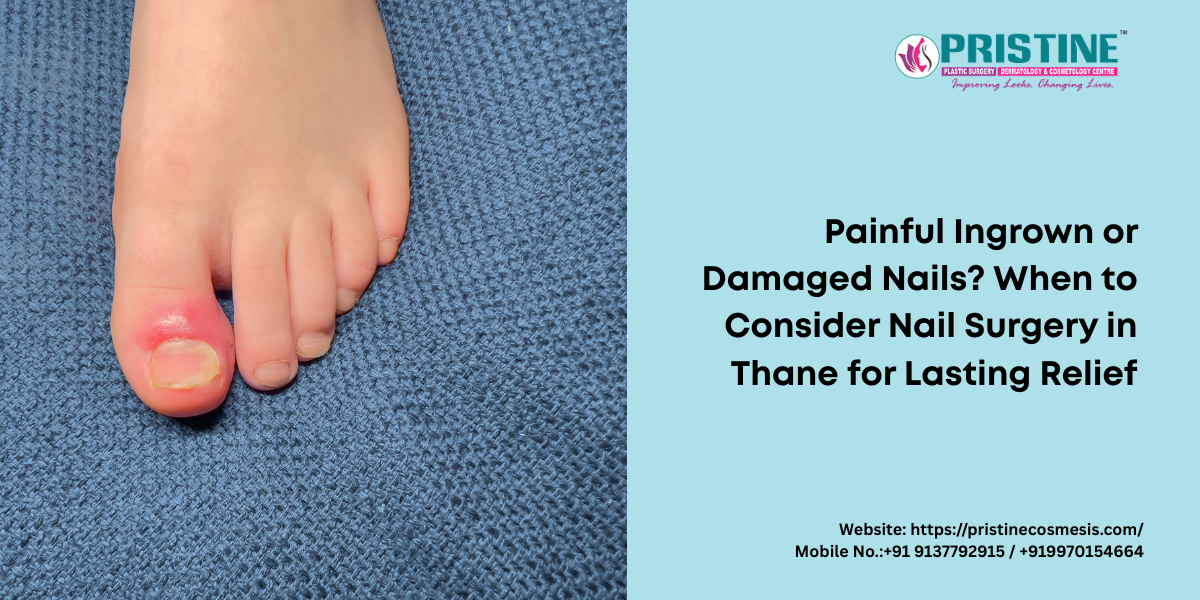
For people searching for Nail Surgery in Thane, one of the most important questions is whether surgery is actually necessary.
In some cases, conservative treatment may be enough. In others, particularly when an ingrown nail keeps returning or becomes severely painful, a surgical approach may be considered.
At Pristine Cosmesis, nail conditions are part of the centre’s dermatological care, while plastic surgery expertise is also available for selected reconstructive concerns. The clinic describes itself as providing management for skin, hair and nail diseases.
What Is an Ingrown Nail?
An ingrown nail occurs when the edge or corner of a nail grows into the surrounding skin.
It most commonly affects the toenail, particularly the big toe.
Symptoms may include:
- Pain around the nail
- Redness
- Swelling
- Tenderness
- Difficulty wearing shoes
- Pus or discharge when infection develops
- Repeated episodes of inflammation
Leaving a painful ingrown nail untreated may allow inflammation or infection to persist.
Why Do Ingrown Nails Happen?
Several factors can contribute to ingrown nails.
These may include:
- Cutting nails too short
- Cutting the corners too deeply
- Tight footwear
- Nail shape
- Repeated pressure or trauma
- Certain nail conditions
- Improper nail trimming habits
Some people may experience recurrent ingrown nails even after temporary improvement.

When Is Nail Surgery Considered?
Not every ingrown nail requires surgery.
A doctor may first recommend conservative care depending on the severity of the problem.
However, Nail Surgery may be considered when:
- The nail repeatedly becomes ingrown
- Pain persists despite conservative treatment
- There is recurrent infection
- The nail edge repeatedly damages surrounding skin
- The condition interferes with normal activities
- The nail has significant deformity
The exact procedure depends on the nail and surrounding tissue.
Why Recurrent Ingrown Nails Need Attention
If an ingrown nail keeps returning, repeatedly treating only the symptoms may not address the underlying problem.
The nail edge may continue to press into the skin, resulting in repeated episodes of inflammation.
A medical evaluation can determine whether a procedure is appropriate and whether there are contributing factors that need to be addressed.
What Happens During a Nail Surgery Consultation?
A doctor will typically examine:
- Nail shape
- Nail edge
- Surrounding skin
- Signs of infection
- Swelling
- Granulation tissue
- Previous episodes
- Footwear and nail-trimming habits
The doctor may also ask whether you have conditions such as diabetes or circulation problems, as these factors can influence wound healing and treatment decisions.
Is Nail Surgery Painful?
The procedure is generally performed with appropriate local anaesthesia when indicated, so the surgical area is numbed during the procedure.
Some soreness or discomfort may occur afterward as the area heals.
Your doctor should explain the expected recovery process and aftercare instructions before the procedure.
What About a Damaged or Deformed Nail?
Not all painful nails are ingrown nails.
Nail changes can also result from:
- Trauma
- Fungal infections
- Skin diseases
- Repeated pressure
- Nail dystrophy
- Previous surgery
- Other medical conditions
This is why self-diagnosing a damaged nail can sometimes lead to incorrect treatment.
A dermatologist can determine whether the problem is an ingrown nail, infection, trauma-related nail damage or another nail disorder.
Nail Surgery in Thane: Choosing the Right Specialist
If you are looking for Nail Surgery in Thane, consider a clinic where nail conditions can be assessed from a medical perspective rather than simply treated as a cosmetic issue.
Pristine Cosmesis provides dermatological care for nail diseases alongside skin and hair conditions.
For more complex surgical or reconstructive concerns, the centre also has access to plastic surgery expertise.
Dr. Nikhil Ghubade – Board-Certified Plastic & Cosmetic Surgeon with 18+ years of experience has extensive experience in reconstructive and plastic surgery. His professional background includes trauma, burns and reconstructive surgery.
Dr. Dhanyata Ghubade – Board-Certified Dermatologist & Cosmetologist with 14+ years of experience provides specialist dermatological care for skin, hair and nail-related concerns.
How Can You Reduce the Risk of Ingrown Nails?
While not every case can be prevented, some everyday measures may help:
- Avoid cutting toenails excessively short.
- Avoid digging deeply into the corners.
- Wear properly fitting footwear.
- Avoid repeatedly traumatizing the nail.
- Keep feet clean and dry.
- Seek medical attention when pain, swelling or infection persists.
If an ingrown nail keeps recurring, professional evaluation is preferable to repeatedly attempting to remove the nail edge yourself.
When Should You Seek Medical Care?
Seek professional attention if you experience:
- Severe nail pain
- Increasing redness
- Swelling
- Pus or discharge
- Recurrent infection
- Difficulty walking
- A wound around the nail
- A nail problem that does not improve
People with diabetes, poor circulation or conditions affecting wound healing should be particularly cautious about persistent foot and nail problems.
Take the Next Step
A painful nail does not have to become a recurring problem that you simply tolerate.
If you have repeated ingrown nails, persistent pain or significant nail damage, a professional examination can help determine whether conservative management or Nail Surgery is more appropriate.
FAQs
- What is Nail Surgery?
Nail surgery refers to procedures used to manage certain nail problems, including selected cases of recurrent or severe ingrown nails. - Does every ingrown toenail require surgery?
No. Mild cases may improve with conservative management. Surgery may be considered for recurrent, severe or persistent cases. - Can an ingrown nail come back after treatment?
Recurrence can occur depending on the underlying nail shape, treatment performed and individual factors. Your doctor can discuss the expected outcome. - How long does Nail Surgery take?
The duration depends on the type and extent of the procedure. Your doctor can provide a more accurate estimate after examining the nail. - Can Nail Surgery treat a damaged nail?
Treatment depends on the reason for the nail damage. Trauma, infection and nail disorders may require different approaches. - When should I see a doctor for an ingrown nail?
Persistent pain, swelling, redness, discharge, recurrent infection or difficulty walking are reasons to seek professional evaluation. - Where can I get Nail Surgery in Thane?
You can consult the specialists at Pristine Cosmesis for evaluation of painful, ingrown or damaged nails and discussion of suitable treatment options.